
Orpheus (1950)
Add to watchlistAt a glance
| Director | Jean Cocteau |
|---|---|
| Genre | Romance, Fantasy, Drama |
| Runtime | 95 minutes |
| Release date | 1950-09-29 |
| TMDB rating | 7.7 (313 votes) |
Trailer
Playing loads the video from YouTube (Google), which receives your IP address.
What it is about
A quarrel erupts in a Parisian café when the poet Orpheus clashes with a group of envious upstarts. When a rival poet falls victim to violence, a mysterious princess arrives and insists on driving Orpheus and the body away in her Rolls-Royce. This journey becomes a passage into another realm entirely, one that exists beyond the boundaries of the living world. There, the princess reveals her true nature: she is Death itself. Orpheus manages to escape back to the land of the living, but the experience has marked him profoundly. He becomes obsessed with the sound emanating from a car radio, as if something from that other world still calls to him.
How it came about
Jean Cocteau directed this 1950 film as a modern reimagining of classical mythology. The cast features Jean Marais as Orpheus, alongside François Périer, María Casares as the enigmatic Princess, and Marie Déa. The work blends the registers of love story, fantasy, and drama, drawing on one of Western culture's most enduring myths and translating it into a contemporary urban setting.
Behind the scenes
The film's architecture rests on the tension between the ordinary and the supernatural. A car radio becomes an oracle; a speeding automobile serves as a vessel between worlds. The choice to set this ancient story in modern Paris, filtered through the sensibilities of post-war cinema, transforms the mythological journey into something both intimate and unsettling. The genres signal a work concerned with desire, loss, and the mysterious forces that govern human fate.
Context and impact
With a rating of 7.7 from a modest base of votes, the film has sustained interest among viewers over more than seven decades. It occupies a particular space in fantasy cinema, one where formal beauty and narrative strangeness converge in service of a story about art, mortality, and obsession.
Images
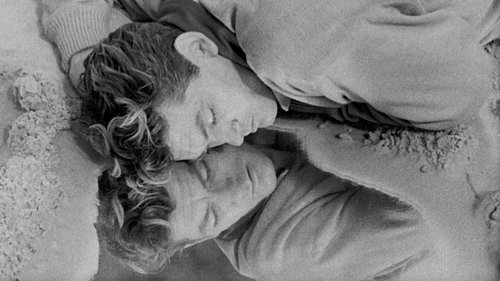
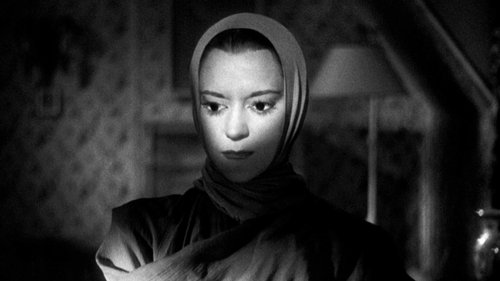


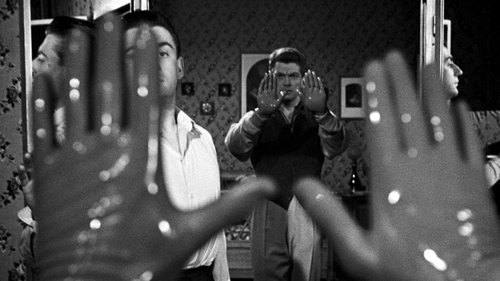
Cast & crew
- Jean Marais as Orphée
- François Périer as Heurtebise
- María Casares as Death
- Marie Déa as Eurydice
- Henri Crémieux as Editor
- Juliette Gréco as Aglaonice
- Roger Blin as The Poet
- Édouard Dermithe as Jacques Cégeste
- André Carnège as Judge
- René Worms as Judge
More films by Jean Cocteau
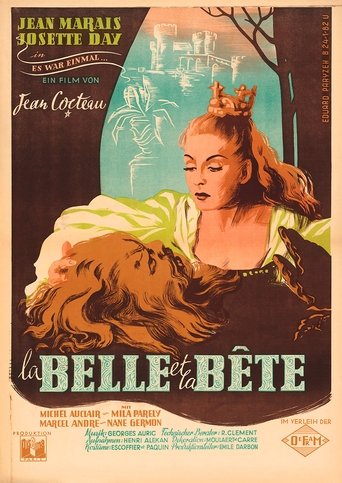


Part of the Orpheus-Trilogie series — all 3 films in release order.
Similar titles




Availability
Not currently included in any known streaming subscription.