
Metropolis (1927)
Add to watchlistAt a glance
| Director | Fritz Lang |
|---|---|
| Genre | Drama, Science Fiction |
| Runtime | 153 minutes |
| Release date | 1927-01-10 |
| Age rating | 6 |
| Budget | 5,300,000 $ |
| Box office | 1,350,322 $ |
| TMDB rating | 8.1 (3,277 votes) |
Trailer
Playing loads the video from YouTube (Google), which receives your IP address.
What it is about
In the metropolis of the future, society is starkly divided. The wealthy live in gleaming towers above the city, while workers toil in darkness underground, building the machines that sustain the world above. When Maria, an idealistic young woman from the underworld, ventures into the upper city to speak of liberation, she captures the heart of Freder, the son of the ruling industrialist Johann Fredersen. Yet Freder's father sees her as a threat. He enlists the brilliant inventor Rotwang to create a robot in Maria's likeness—one programmed to incite the workers to riot so that the ruling class has justification to crush them decisively. The plan unfolds with devastating effectiveness.
How it came about
Fritz Lang directed this science fiction drama in 1927, an adaptation of a novel that imagines a stratified future society. The film stars Gustav Fröhlich as Freder, Brigitte Helm as Maria and the robot, Alfred Abel as the industrialist Fredersen, and Rudolf Klein-Rogge as the visionary Rotwang. Approved for audiences from age six onward, the work combines the conventions of Weimar-era drama with speculative visions of technological futures.
Behind the scenes
The film's central conflict pits human desire—for love, for freedom, for dignity—against the cold logic of machines and power structures. The doubling of Maria through her mechanical counterpart explores how idealism can be corrupted and weaponized. The physical geography of the city itself, divided vertically into oppressor and oppressed, makes the social hierarchy inescapable and visible.
Context and impact
With a rating of 8.1 from viewers in the thousands, the film commands sustained respect nearly a century after its release. It remains foundational to how science fiction imagines automated labor, class conflict, and the moral questions surrounding technological control.
Images


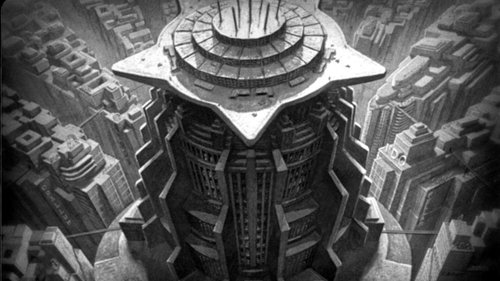


Cast & crew
- Gustav Fröhlich as Freder Fredersen
- Brigitte Helm as Maria / The Machine Man
- Alfred Abel as Johann 'Joh' Fredersen
- Rudolf Klein-Rogge as C.A. Rotwang
- Theodor Loos as Josaphat
- Fritz Rasp as The Thin Man
- Erwin Biswanger as No. 11811 - Georgy
- Heinrich George as Grot
- Fritz Alberti as Creative Human - Man Who Convinces Babel (uncredited)
- Grete Berger as Working Woman (uncredited)
More films by Fritz Lang




Similar titles




Availability
Not currently included in any known streaming subscription.