
Intolerance: Love's Struggle Throughout the Ages (1916)
Add to watchlistAt a glance
| Director | D.W. Griffith |
|---|---|
| Genre | Drama, History |
| Runtime | 163 minutes |
| Release date | 1916-09-05 |
| Age rating | 18A |
| Budget | 385,907 $ |
| Box office | 1,750,000 $ |
| TMDB rating | 7.1 (398 votes) |
Trailer
Playing loads the video from YouTube (Google), which receives your IP address.
What it is about
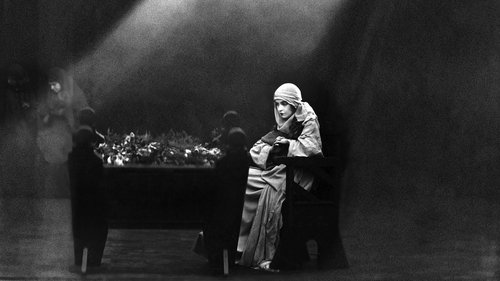
Four episodes from different eras of human history unfold in parallel: the fall of Babylon as invading forces exploit religious schism; moments from the life of Christ and his conflict with the Pharisees; the Saint Bartholomew's Day Massacre in sixteenth-century Paris, where a woman named Brown Eyes finds herself caught between love and religious persecution; and a contemporary industrial conflict in which wage cuts fuel both labor unrest and the descent of a desperate worker into crime. Each narrative demonstrates how intolerance—religious, political, economic—brings suffering and destruction.
How it came about
D.W. Griffith directed this 1916 drama as an ambitious four-part meditation on history. Lillian Gish, Mae Marsh, and Robert Harron anchor the ensemble cast across the multiple storylines, with F.A. Turner among the supporting players. The film constructs its argument through the juxtaposition of these narratives, each separated by centuries yet bound by a common theme.
Behind the scenes
The structural approach—weaving separate historical episodes to illustrate a single idea—requires viewers to perceive connections across time and circumstance. The combination of ancient and biblical history, Renaissance religious violence, and modern class conflict suggests a vision of intolerance as a recurring human failing rather than a product of any particular era or ideology. The contemporary industrial strand particularly grounds the film's abstract thesis in material conflict and social consequence.
Context and impact
Nearly a century after its release, the film holds a moderate rating of 7.1 from an audience base in the low hundreds. Its reputation rests on its structural ambition and the scale of its historical recreations rather than any subsequent critical consensus. The work represents a distinctive approach to historical drama through parallel narrative.
Images




Cast & crew
- Lillian Gish as The Woman Who Rocks the Cradle
- Mae Marsh as The Dear One (Modern Story)
- Robert Harron as The Boy (Modern Story)
- F.A. Turner as The Girl's Father (Modern Story)
- Sam De Grasse as Arthur Jenkins (Modern Story)
- Vera Lewis as Mary T. Jenkins (Modern Story)
- Lillian Langdon as Mary, the Mother (Judean Story)
- Olga Grey as Mary Magdalene (Judean Story)
- Erich von Ritzau as First Pharisee (Judean Story)
- Bessie Love as The Bride of Cana (Judean Story)
More films by D.W. Griffith


Similar titles




Availability
Not currently included in any known streaming subscription.