
The Tin Drum (1979)
Add to watchlistAt a glance
| Director | Volker Schlöndorff |
|---|---|
| Genre | Drama, History, War |
| Runtime | 162 minutes |
| Release date | 1979-05-02 |
| Age rating | 16 |
| Budget | 3,000,000 $ |
| Box office | 17,000,000 $ |
| TMDB rating | 7 (570 votes) |
Trailer
What it is about
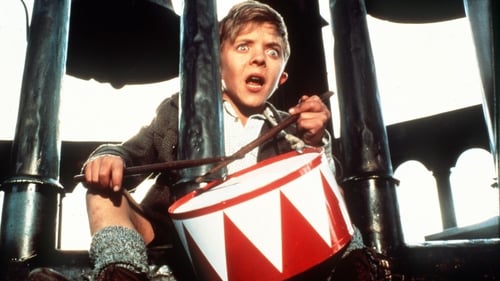
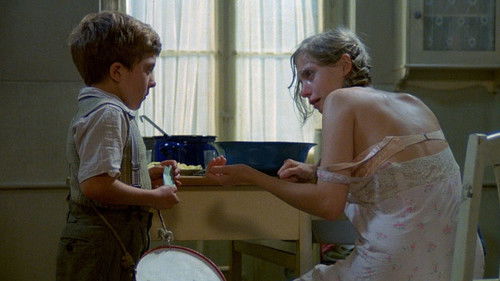
Danzig 1927. Oskar Matzerath is three years old and has already reached a conclusion: he cannot and will not accept the petty bourgeois life that the adults around him are leading. His answer is as simple as it is unprecedented — he stops growing.
From then on, the anarchic dwarf protests with his tin drum: against the fanatical Nazis, against their cowardly fellow travellers, against the musty philistines of the Weimar Republic and their crude eroticism. And he has a second weapon. His voice is so loud and shrill that all glass shatters in his presence. Only after the war, when a more humane age dawns, does Oskar decide to participate in life again — and to resume growing.
How it came about
Volker Schlöndorff directed the film, which came out in 1979. The cast is led by Mario Adorf, Angela Winkler, David Bennent and Katharina Thalbach.
Behind the scenes
Drama, history and war film — three genres that together describe the framework: a life story that runs through the Weimar Republic, the era of the Nazis and the war. What sets the film apart from this framework is the narrative perspective. A child who refuses to grow is not a realistic figure, but an artifice: the refusal becomes a commentary on a society that conforms. Drum and glass-shattering voice are protest in its purest form, without argument, without programme. The design works with grotesque and contemporary history at once, and the fact that Oskar only begins to grow again after the war makes his growth a measure of circumstances.
Context and impact
The average rating of 7.0 out of 10 is based on a few hundred votes — for a film that dates back 47 years, a manageable but stable foundation. In the field of war and historical dramas, it occupies a special position because it does not depict contemporary events in a chronicle-like manner, but breaks them through a grotesque figure whose refusal is louder than any speech.
Images



Cast & crew
- Mario Adorf as Alfred Matzerath
- Angela Winkler as Agnes Matzerath
- David Bennent as Oskar Matzerath
- Katharina Thalbach as Maria Matzerath
- Daniel Olbrychski as Jan Bronski
- Tina Engel as Young Anna Koljaiczek
- Berta Drews as Anna Koljaiczek
- Roland Teubner as Joseph Koljaiczek
- Tadeusz Kunikowski as Uncle Vinzenz
- Andréa Ferréol as Lina Greff
More films by Volker Schlöndorff



Similar titles




Availability
Not currently included in any known streaming subscription.