Bruno Dumont
Career
Bruno Dumont was born in 1958 in Bailleul, France. To date, he has directed ten feature films that move between realistic drama and avant-garde. Before his film work, he engaged with Greek and German philosophy as well as corporate videos. His films frequently display extreme violence and provocative sexual behaviour and are typically classified as art house cinema. Dumont compares his work to visual art himself and typically works with long takes, close-ups of bodies and narrative strands marked by extreme emotions. Instead of classical screenplays, he writes complete novels that serve as the foundation for his films. Among his influences, he names Stanley Kubrick, Ingmar Bergman, Pier Paolo Pasolini, Roberto Rossellini and Abbas Kiarostami, and he is often regarded as the artistic successor to Robert Bresson. His work is also associated with the New French Extremity movement.
Filmography in our catalogue
Four feature films directed by Bruno Dumont are listed in the catalogue; there are no series among them. The titles span a period of 22 years, from "L'humanité" (1999) to "France" (2021). In terms of genre, the spectrum ranges from drama through mystery and thriller to comedy, which suggests a certain stylistic diversity within his bleak overall body of work. The first title in the catalogue was released when Dumont was 41 years old; the most recent when he was 63.
Assessment
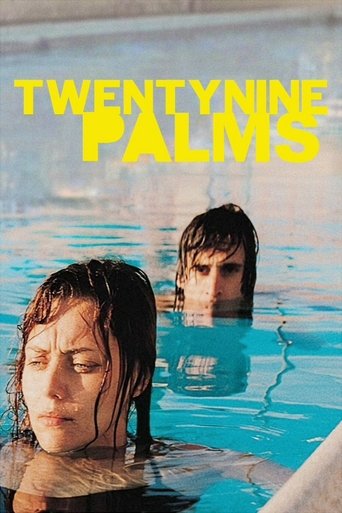
The ratings for the four titles range between 5.1 and 6.7 out of 10, averaging 5.6. "L'humanité" from 1999 receives the highest rating at 6.7 out of 10, whilst the later films "Twentynine Palms", "Die feine Gesellschaft" and "France" consistently score between 5.1 and 5.5 out of 10 in the middle range. Over the entire span of 22 years, the listed titles thus demonstrate a relatively uniform, overall moderate rating level.