Aleksander Bardini
Career
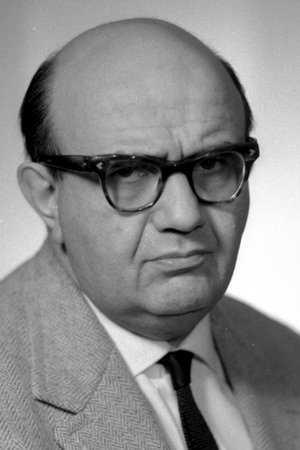
Aleksander Bardini was born on 17 November 1913 in Łódź into a Jewish family. After graduating from school in 1932, he studied violin and performed with a string quartet and in a Jewish cabaret. In 1935 he completed his studies at the acting department of PIST in Warsaw. He worked as an actor at the City Theatre in Wilno and the Polish Theatre in Warsaw before joining the travelling COP Theatre in 1939 and later the city theatres in Lwów as an actor and director. During the German occupation, he was initially in the Lwów Ghetto, then went into hiding in a private flat and returned in 1944 to the Polish Dramatic Theatre in Lwów, where he remained until its evacuation in 1945. After moving to Katowice, he emigrated following the Kielce pogrom in 1946 and lived in the USA, Canada and West Germany until 1950. After returning to Poland in 1950, he worked as a director at the Polish Theatre Warsaw, including on the first post-war production of Mickiewicz's "Totenfeier". This was followed by positions at the Jaracz Theatre Łódź, the Ateneum Theatre and the Teatr Współczesny in Warsaw. He also taught at the Warsaw Theatre School and other institutions. Bardini died in Warsaw.
Filmography in our catalogue
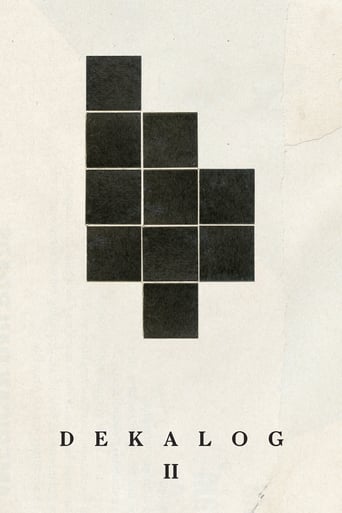
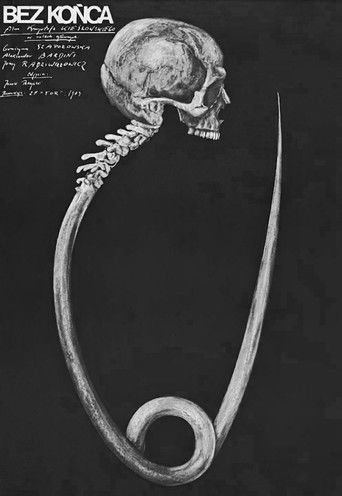
Aleksander Bardini is represented in our catalogue as an actor with three titles, all of them drama films and TV films. The titles date from 1985 to 1989, including two episodes from the "Dekalog" series as well as "Ohne Ende". The span thus covers four years, at a time when Bardini was already over seventy years old – the oldest title appeared 72 years, the youngest 76 years after his birth.
Assessment
The three titles are rated 7.8, 7.3 and 7.0 in our catalogue, averaging 7.4. All ratings thus fall in an upper-middle range and do not deviate significantly from one another. The filmography covers only a brief period at the end of his life and is limited to the drama genre.